Discover the best halibut fishing destinations, guided trips, and lodge-based experiences worldwide. Explore remote waters and world-class angling with expert local hosts.

Southeast Alaska
Chinook (King) Salmon, Coho (Silver) Salmon, Halibut
British Columbia, Canada
Chinook (King) Salmon, Coho (Silver) Salmon, Halibut
Southeast Alaska
Chinook (King) Salmon, Coho (Silver) Salmon, Halibut
No results available
Found in cold, nutrient-rich waters of the North Pacific and North Atlantic, halibut are among the largest and most prized bottomfish in the world. These flatfish reach massive sizes and are known for their strength, stamina, and white flesh prized by chefs and anglers alike. From Alaska to Norway, halibut fishing is built around deep drops, strong tides, and serious gear.
Halibut are ambush predators that spend most of their time near the seafloor, on sandy, muddy, or gravel bottoms at depths ranging from a few hundred to several thousand feet. They are opportunistic feeders, taking herring, cod, octopus, and crab. Most halibut are caught by bottom fishing with large baits and heavy tackle, though vertical jigging has become increasingly effective in shallower water.
Two species matter to traveling anglers: the Pacific halibut (Hippoglossus stenolepis), found across the North Pacific from California to the Bering Sea, and the Atlantic halibut (Hippoglossus hippoglossus), the largest flatfish in the world, found across the North Atlantic. Pacific halibut are the primary target for lodge-based sport fishing. Atlantic halibut have been listed as Endangered on the IUCN Red List since 1996 due to historic overfishing and slow recovery — anglers fishing in Norway and the North Atlantic should verify current regulations and fishery status before targeting them.
Their size — the sport-caught world record stands at 459 lbs, taken off Dutch Harbor, Alaska in 1996 — makes them a serious test of endurance. Despite their flat, bottom-dwelling appearance, halibut can take long, powerful runs, especially in shallower water. For traveling anglers, these fish combine a trophy experience with some of the finest table fare in the ocean.
Halibut inhabit both the North Atlantic and North Pacific, though Pacific fisheries dominate lodge-based sport fishing programs.
From Southeast Alaska to Kodiak Island and the Aleutians, Alaska produces some of the largest sport-caught halibut on earth. Deep fjords, offshore banks, and strong tidal movement make for consistently productive grounds, with most visiting anglers landing fish in the 40–100 lb range and genuine barn doors well above that encountered each season.
BC’s rugged coastline offers consistent Pacific halibut action, especially around Haida Gwaii, Vancouver Island, and the central coast. Most lodges offer multi-species programs combining halibut offshore with salmon inshore.
Northern Norway, Iceland, and Greenland hold Atlantic halibut in deep reefs, drop-offs, and sandy bays, with fish exceeding 300 lbs possible on productive grounds. Atlantic halibut are listed as Endangered by the IUCN — check current Norwegian and Icelandic fishery regulations before planning a targeted trip, as rules and access vary by area and season.
Kamchatka and the Barents Sea offer halibut potential with minimal fishing pressure. These waters are remote, cold, and suited to adventurous anglers on multi-species expeditions.
Greenland’s western coastlines hold Atlantic halibut in little-developed fisheries. Given the IUCN Endangered status of the Atlantic species, any fishing here should be approached with a strong catch-and-release ethic and current regulatory awareness.
Halibut offer a combination of size, power, and table quality that few saltwater species can match. Pacific halibut in particular grow to extraordinary proportions and demand both physical strength and tactical precision to land. Despite their flat appearance, they take long, strong runs and are not easily brought to the surface.
Their firm, white flesh is among the most prized in the ocean. The combination of fighting strength and table quality makes them one of the few genuinely dual-purpose trophies in saltwater fishing.
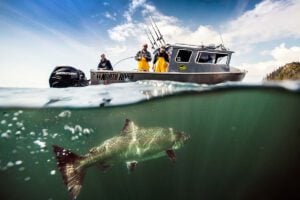
Halibut are flatfish with both eyes on the upper side of the body — an adaptation to life on the seafloor. The upper side is dark, typically olive, brown, or grey, and adjusts to match the bottom. The underside is white. Pacific halibut have a distinctive crescent-shaped tail and a high arch in the lateral line above the pectoral fin, which distinguishes them from other flatfish. Atlantic halibut are the larger species by maximum size, with the same basic body plan but a more elongated profile at very large sizes. Their sheer width and bulk — large specimens are nicknamed “barn doors” — is the defining visual impression.
FishingExplora lists halibut lodges in Alaska and British Columbia. Whether targeting Pacific halibut on a dedicated offshore program or combining halibut with salmon on a multi-species trip, these operations offer access to prime grounds, experienced guides, and appropriate gear.
FishingExplora’s editorial content draws on lodge input, guide experience, published field reports, and independent research to help anglers make informed decisions about premium fishing destinations.
Pacific halibut in Alaska and BC can exceed 300 lbs, with the sport-caught world record standing at 459 lbs from Dutch Harbor, Alaska. Most visiting anglers land fish in the 40–100 lb range, with larger fish encountered regularly on productive grounds around Kodiak, Haida Gwaii, and Southeast Alaska.
Lodges typically provide heavy conventional rods and reels, braided line in the 80–150 lb range, and large circle hooks. Bait is usually herring, salmon heads, or squid. Most lodges also offer jigging setups for shallower water.
Yes. Most coastal lodges in Alaska and British Columbia offer combination programs targeting halibut offshore and salmon inshore. These multi-species trips run through summer and are among the most popular formats for visiting anglers.
Pacific halibut are widely regarded as one of the finest eating fish in the ocean — firm, mild white flesh that holds up well to grilling, baking, or pan-frying. Most lodge programs include professional fish processing and vacuum packing so anglers can take fillets home.
Yes. Large halibut are powerful fish and require genuine strength and stamina to land, particularly in deeper water where the fish can use their flat profile to resist being brought up. Lodges typically provide fighting belts or harnesses for larger fish.
Pacific halibut are the primary sport fishing target, with a healthy, well-managed population across Alaska and British Columbia. Atlantic halibut are the larger species by maximum recorded size but have been listed as Endangered by the IUCN since 1996 due to historic overfishing. Sport fishing for Atlantic halibut exists in Norway and Iceland but is subject to local regulations — check current rules before planning a targeted trip.
We use cookies to improve your experience and enable key features on the platform. You can choose which cookies to allow. Some features may not work fully without consent.