Discover the best ndungu (african pacu) fishing destinations, guided trips, and lodge-based experiences worldwide. Explore remote waters and world-class angling with expert local hosts.
Tanzania, East Africa
Ndungu (African pacu), Tigerfish, Vundu (Giant Catfish)
No results available
Ndungu—often called the African pacu—are powerful freshwater fish found in wild river systems across East and Central Africa. Known for their broad bodies and crushing surface eats, they offer a unique target in select jungle rivers.
Belonging to the Distichodus genus, ndungu are relatives of the South American pacú but adapted to African ecosystems. They feed on fruit, seeds, and aquatic vegetation, making them one of the few freshwater species in Africa that consistently rise to surface food. Anglers target them near overhanging trees, eddies, and slackwater pockets where natural forage collects.
While not widely targeted across the continent, ndungu are accessible in certain Tanzanian rivers through lodge-based trips. Their visual feeding behavior, raw power, and remote settings make them one of the most interesting African freshwater species to pursue on fly or light spin gear.
Looking for South American pacú? Visit our Pacú fishing species page.
Tanzania offers the most established access to ndungu through lodge-based operations. Anglers fish remote rivers with overhanging vegetation, drift feeding zones, and structure-rich banks where ndungu rise to fruit and seeds.
Ndungu are found in tributaries of the Nile in Uganda and in the Kafue and Luangwa Rivers of Zambia. These systems are rich in overhanging vegetation, and ndungu are occasionally caught near bankside cover and backwater eddies.
The Congo Basin supports native populations of ndungu in rainforest-fed rivers and oxbow systems. These fisheries are biologically rich but see almost no sport angling pressure due to access constraints.
Some rivers in Mozambique, especially in the Zambezi basin and smaller coastal watersheds, hold pacu-like species including ndungu. These fisheries remain largely undeveloped but have potential for targeted exploration.
Ndungu feed in a way that’s rare for African freshwater species—consistently rising to surface food like fruit, seeds, or insects. This allows for topwater fishing in regions typically dominated by subsurface tactics. Their take is subtle, but once hooked, they fight with power and stamina, using their broad frame and river current to full advantage.
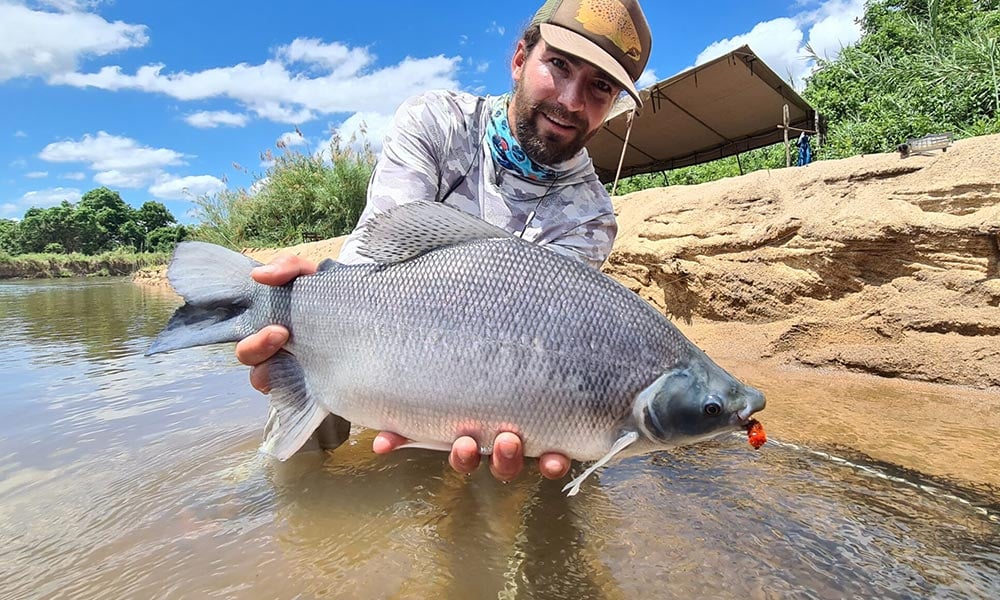
Ndungu have a deep, oval-shaped body with thick lips, large scales, and strong lateral compression. Coloration ranges from silvery to bronze with occasional vertical markings and darker fins. Their body profile is similar to South American pacú, but with more angular fins and steeper backs. Fish commonly weigh 5–15 pounds, with larger individuals possible in remote rivers.
Across Africa, ndungu fishing improves when rivers are stable, visibility increases, and natural food sources are active. Timing trips around fruit drop and dry season flows increases the chance of surface eats and sight-fishing.
FishingExplora currently features lodge-based trips in Tanzania where ndungu are part of a broader freshwater mix. Whether drifting under fruiting trees or targeting calm eddies near jungle cover, these trips offer experienced anglers a rare opportunity to pursue one of Africa’s most interesting and underappreciated freshwater gamefish.
No—ndungu are African species in the Distichodus genus, while pacú are South American fish. They’re similar in build and diet, but come from different river systems and families.
Yes—ndungu feed on surface vegetation, seeds, and fruit, making them one of the few African species that can be reliably caught on surface or dead-drifted flies.
Most ndungu encountered by anglers range from 5 to 15 pounds. Larger fish are possible in remote or less-pressured river systems with rich food sources.
The dry season (roughly July to November) provides low, clear water and concentrated food sources, creating ideal conditions for targeting ndungu with fly or spin gear.
We use cookies to improve your experience and enable key features on the platform. You can choose which cookies to allow. Some features may not work fully without consent.