Discover the best lake trout fishing destinations, guided trips, and lodge-based experiences worldwide. Explore remote waters and world-class angling with expert local hosts.

Bristol Bay, Alaska
Chum (Keta) Salmon, Coho (Silver) Salmon, Dolly Varden
Bristol Bay, Alaska
Arctic Char, Chinook (King) Salmon, Chum (Keta) Salmon
Bristol Bay, Alaska
Arctic Char, Chinook (King) Salmon, Chum (Keta) Salmon
No results available
Lake trout thrive in deep, cold, oxygen-rich lakes across northern North America. Known for their power, size, and aggressive strikes, they’re a top target for anglers who enjoy jigging, trolling, or vertical presentations in rugged, remote settings.
Lake trout (Salvelinus namaycush) are the largest member of the char family and native to Canada and the northern United States. These apex predators live in deep water and feed heavily on baitfish, crustaceans, and smaller trout. Trophy specimens regularly top 20–40 pounds in remote lakes with minimal angling pressure.
Unlike stream-dwelling trout, lake trout spend much of their time in cold, deep water—often cruising offshore areas and drop-offs in search of food. In spring and fall, they move closer to shore, giving anglers a chance to catch them on fly or light tackle in surprisingly shallow water.
Canada is home to some of the best lake trout fisheries on earth. Ontario, Manitoba, Saskatchewan, and the Northwest Territories offer huge, unpressured lakes with consistent action for big fish. Most lodges are fly-in only and provide access to truly wild waters.
Alaska’s interior and northern lakes hold native lake trout that are often overlooked. These fish feed aggressively during the short open-water season and can be targeted with flies, jigs, or trolling gear depending on the system.
From the Great Lakes to high-altitude lakes in the Rockies, lake trout are widely distributed in deep, cold U.S. waters. States like Michigan, Colorado, and Wyoming offer a mix of wild and stocked populations with reliable fishing spring through fall—and through the ice in winter.
Lake trout combine size, aggression, and remoteness. They grow big, fight hard, and often live in places that take effort to reach—making them a perfect species for anglers who enjoy adventure and solitude. Whether you’re jigging from a boat or ice fishing a wind-blown lake in the far north, every take feels earned.
They’re also versatile. In spring and fall, lake trout hunt shallow flats and shorelines where they’ll take flies, streamers, or spoons. In summer, they drop into deeper water and continue feeding, making them one of the few trout species that stay highly active year-round.
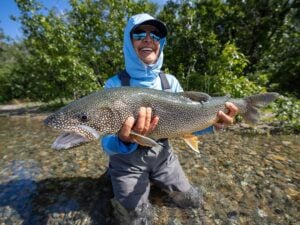
Lake trout have thick, muscular bodies with deeply forked tails and broad heads. Their coloration ranges from dark green or slate gray to silvery olive, with light-colored vermiculations or spots on their back and flanks. During the spawn, males darken and may develop orange highlights along the belly and fins.
They’re easily distinguished from other trout and char by their tail shape, long bodies, and distinctive pale markings. Big lake trout often appear almost prehistoric—thick, scarred, and built for slow, powerful runs in cold water.
FishingExplora connects anglers to premier lake trout destinations in Canada and Alaska. From fly-out adventures into Canada’s remote glacial lakes to guided lodge trips in Alaska’s interior and tundra regions, our partner operations offer access to massive fish, knowledgeable guides, and truly wild fishing environments.
Canada’s northern provinces—especially the Northwest Territories, Manitoba, and Saskatchewan—are home to the largest wild lake trout. These fish often exceed 30 or even 40 pounds in remote, rarely fished lakes.
Yes—especially in spring and fall when they move shallow. Large streamers and leeches fished on sinking lines can produce aggressive strikes along rocky shorelines and flats.
In warmer months, vertical jigging and trolling are the most effective ways to reach deeper fish. Focus on drop-offs, mid-lake humps, and current edges where lakers actively feed.
Absolutely. Ice fishing is one of the best times to catch lake trout, especially in clear northern lakes. Use heavy jigs or bait rigs over known drop-offs or feeding areas.
No—lake trout move shallow during spring and fall but hold deeper in summer. The timing of these movements varies by lake and temperature, but they’re predictable and fishable throughout the season.
We use cookies to improve your experience and enable key features on the platform. You can choose which cookies to allow. Some features may not work fully without consent.