Discover the best northern pike fishing destinations, guided trips, and lodge-based experiences worldwide. Explore remote waters and world-class angling with expert local hosts.
Bristol Bay, Alaska
Arctic Char, Chinook (King) Salmon, Chum (Keta) Salmon
Bristol Bay, Alaska
Arctic Char, Chinook (King) Salmon, Chum (Keta) Salmon
Bristol Bay, Alaska
Chum (Keta) Salmon, Coho (Silver) Salmon, Dolly Varden
Bristol Bay, Alaska
Arctic Char, Chinook (King) Salmon, Chum (Keta) Salmon
No results available
Northern pike are fierce, ambush-oriented predators known for crushing strikes and violent battles. From the weedy backwaters of Alaska to the remote lakes of Canada and the clear rivers of Mongolia, they offer aggressive, visual action in dramatic landscapes.
Northern pike (Esox lucius) — known simply as “pike” across Europe — are one of the most widespread and iconic freshwater predators in the Northern Hemisphere. The same species under two names: “northern pike” is the term used in North America, “pike” in Europe and Asia. They thrive in cold, weedy systems where channels, shallow bays, and drop-offs allow them to ambush prey with explosive acceleration.
In spring and fall, northern pike move into the shallows to feed heavily, offering visual eats and surface explosions that rival anything in freshwater. On the fly, they are pursued with 8–10 weight rods and large baitfish patterns; on spinning gear, jerkbaits, spoons, and topwater lures all produce. Their willingness to chase large, flashy presentations in plain sight makes them one of the most addictive freshwater species anywhere.
Alaska’s interior and western drainages hold healthy pike populations, particularly in the Yukon River system and associated sloughs, oxbows, and lakes. Shallow, vegetated backwaters offer sight-fishing and surface strikes during the warmer months. Note: pike are native to Alaska north and west of the Alaska Range but are considered an invasive species in southcentral Alaska, where they threaten rainbow trout — regulations vary significantly by area.
Manitoba, Saskatchewan, and the Northwest Territories consistently produce some of the largest northern pike in the world. Remote fly-in lodges offer access to lightly pressured water with high numbers of fish over 40 inches, particularly during post-spawn feeding in spring and the pre-winter push in fall.
Mongolia’s Onon and Kherlen river drainages — the same systems targeted for taimen — hold populations of Amur pike (Esox reichertii), a distinct but closely related species native to the broader Amur River basin. Amur pike behave similarly to northern pike but are identified by dark spots on a light background rather than the reverse. They are rarely targeted specifically but are caught as a bonus species on taimen expeditions, adding genuine variety to multi-species wilderness trips.
Minnesota, Wisconsin, Michigan, and New York offer excellent pike fishing in glacial lakes and rivers, especially during spring and fall when fish move shallow. These are the most accessible fisheries for US-based anglers targeting the species.
Scandinavia, Ireland, Finland, and Central Europe offer world-class pike fishing in large lakes, river systems, and canals. Catch-and-release culture is well established across much of northern Europe, and the IGFA world record — 55 lbs 1 oz — was taken from Greffern Lake in Germany in 1986. Pike fishing is especially popular in Ireland and Sweden, where large, lightly pressured fish are accessible.
Russia’s northern river systems and lakes are virtually untouched. Pike here grow large and respond aggressively to flies and lures during short open-water seasons from late May through August.
Northern pike strike with violent force, often in full view along weed edges or in the shallows where visibility is best. They’re highly visual, aggressive, and rewarding to target with big gear and bold tactics. Unlike many freshwater predators that demand finesse, pike reward confidence — large flies, loud lures, and fast retrieves all trigger strikes.
Their distribution across so many diverse environments — from Alaskan sloughs to European canals to Mongolian river floodplains — makes them a species that serious freshwater predator anglers can encounter almost anywhere in the Northern Hemisphere.
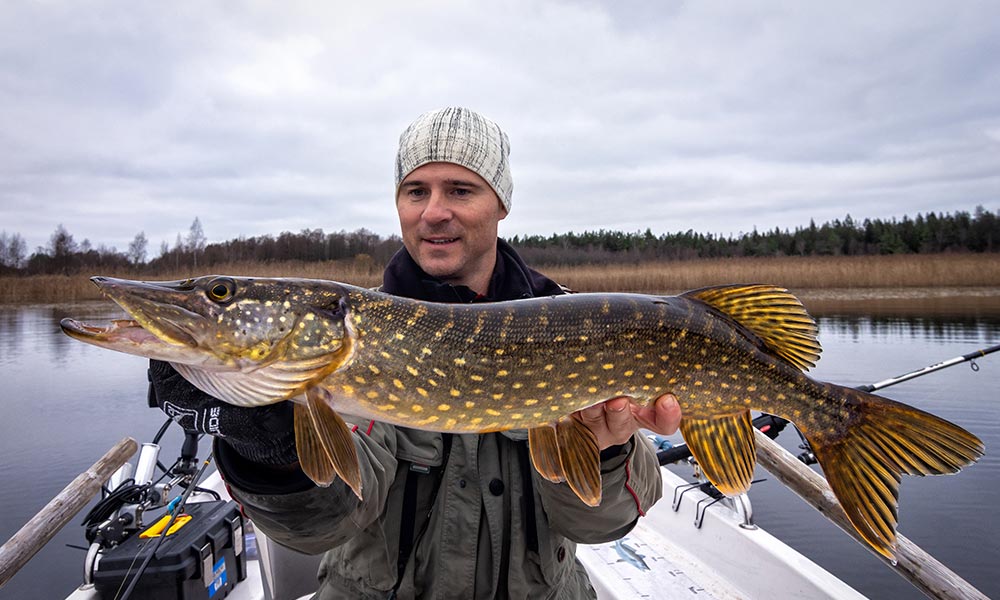
Northern pike are long and muscular with an olive-green back, yellowish bean-shaped spots along the flanks, and a creamy-white belly. The body is built for explosive acceleration — long snout with rows of sharp teeth, torpedo-like profile, and dorsal and anal fins set far back near the tail.
A useful identifier: scales cover the entire cheek on northern pike, distinguishing them from the closely related muskellunge, which only has scales on the upper half of the cheek. Fins often show reddish or orange hues in clear water. Most fish range from 24 to 40 inches; in remote waters with low pressure, 45-inch-plus fish are not uncommon.
FishingExplora lists northern pike lodges in Alaska, with Amur pike also available as a bonus species through Mongolia taimen programs. Each listing covers program structure, access, season dates, and direct contact with the lodge.
FishingExplora’s editorial content draws on lodge input, guide experience, published field reports, and independent research to help anglers make informed decisions about premium fishing destinations.
No — pike and northern pike are two names for the same species, Esox lucius. “Pike” is the standard term in Europe and Asia; “northern pike” is used in North America. There are two related but distinct species worth knowing: the Amur pike (Esox reichertii), native to Mongolia’s Onon and Kherlen drainages and the broader Amur basin, and the southern pike of northern Italy — both genetically separate from northern pike.
Canada consistently produces trophy fish, especially in remote fly-in lakes across Manitoba, Saskatchewan, and the Northwest Territories where pressure is low and forage is abundant. Northern Europe — particularly Sweden and Ireland — also holds very large fish; the IGFA world record of 55 lbs 1 oz came from Germany. Alaska produces quality fish but generally not in the same size class as the best Canadian or European waters.
Spring and fall are the peak windows. Post-spawn fish move into shallow weedy bays in spring and feed aggressively, making them highly accessible to fly anglers. Fall brings renewed activity as water cools before winter. In northern latitudes — Alaska, Canada, Scandinavia — early summer can also be productive as water temperatures stay moderate and fish remain in shallower, fishable zones.
Both — northern pike thrive in lakes and slow-moving rivers, and adapt well to most freshwater environments with adequate vegetation and baitfish. In rivers they hold in side channels, back eddies, and sloughs. In lakes they favor weed beds, drop-offs, and shallow bays. In Alaska they are particularly associated with weedy oxbows and sloughs connected to larger river systems.
For fly fishing, an 8–10 weight rod with a wire bite tippet is standard — pike teeth will cut through monofilament quickly. Large baitfish streamers, poppers, and divers are the go-to patterns. For spin fishing, medium-heavy rods with braided line and steel leaders, paired with large jerkbaits, spoons, or swimbaits, cover most situations. Floating lines work for shallow presentations in spring and fall; sink-tips for deeper summer fish.
We use cookies to improve your experience and enable key features on the platform. You can choose which cookies to allow. Some features may not work fully without consent.