

Tigerfishing on the Upper Zambezi
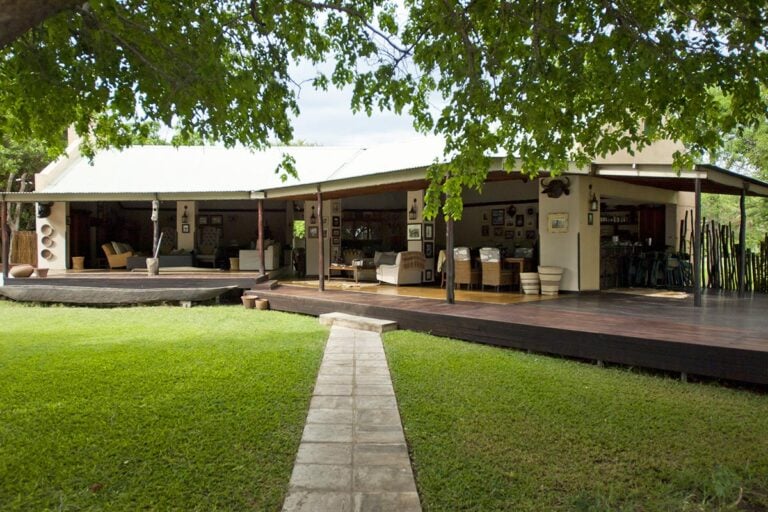
On a quiet side channel of the upper Zambezi, within the stretch of river anglers know as “Tiger Country”, Shackletons Tiger Fishing Lodge has shoreline access to waters that hold hard-fighting tigerfish, large vundu catfish and many African bream species.
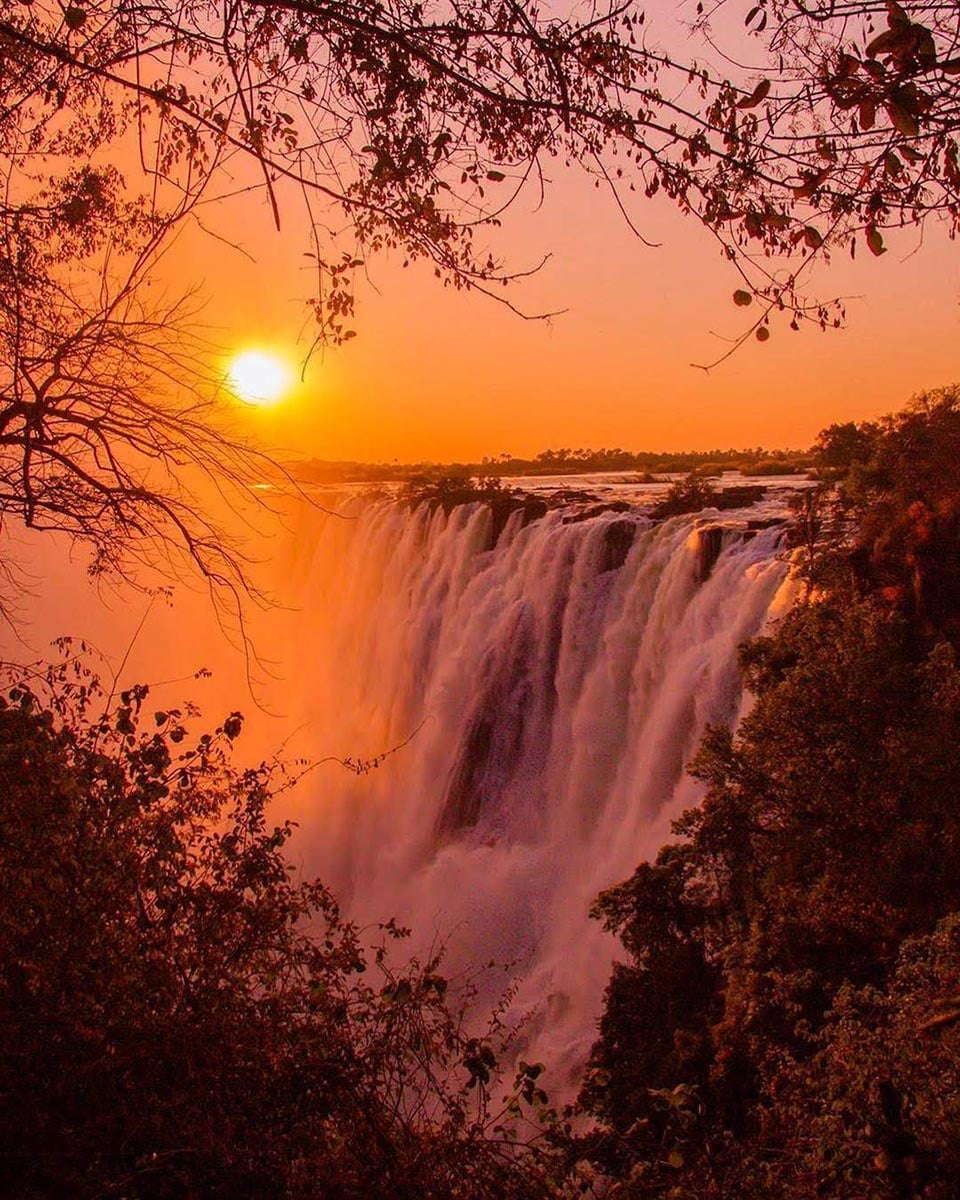
The lodge works up to around 60km of the main Zambezi river, up- and downstream, fishing channels, sandbanks, drop-offs and reed lines that run to about 4 meters at their deepest. Three named spots within just 10 minutes by boat — Golden Ponds, Tiger Alley and Matoya Point — account for much of the daily fishing. Further downstream, the Zambezi joins the flow of the Chobe River, and runs all the way to the world famous Victoria Falls.
On this stretch of the upper Zambezi, waters in the dry season tend to run clearer than further downstream, and is home to larger sized tigerfish. Anglers will find themselves immersed in the untamed wildlife and spectacular river landscapes of the Zambia–Namibia border, while fishing the wide flows of this water system in pursuit of one of Africa’s most sought-after game fish.
Zambezi Tigerfish Size and Strength
The African Tigerfish (Hydrocynus vittatus) of the Zambezi typically average 5-10lb, with the upper Zambezi holding the larger specimens. Over the course of a week’s stay, most guests will encounter consistent action and land multiple fish, testament to the abundant supply of them in these parts. The lodge’s own tigerfish record stands at 23lb — an excellent trophy size for the Zambezi.
The 23 lb lodge record gives some sense of what’s possible here, but it’s the consistency that stays with most guests — fish in shoals mean a strike on one rod can quickly bring a second rod to life, while the solitary fish that holds deep against structure tends to be the one worth waiting for.
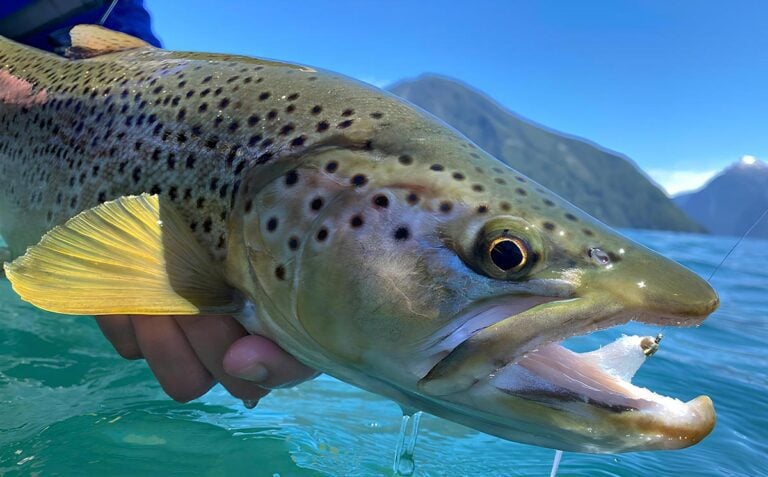
With their silvery large scales, oversized teeth, and a sleek, torpedo-shaped body marked with thin black stripes and red-and-yellow fins edged in black, the tigerfish is as striking to look at as it is to fight. Once hooked, tigerfish are renowned for their explosive strength, sustained power, and acrobatic runs, making them one of the hardest-fighting freshwater species in Africa.
Fly Fishing, Spinning & Baitfishing
Shackletons doesn’t focus on a single technique — guides work with fly fishing, spinning, trolling and live bait depending on conditions. For anyone who’s never picked up a fly rod, this is a real advantage. Conventional tackle — rods, reels and gear for spinning and bait fishing — is included in the rates, putting these methods within reach of anglers of any age or experience level, including families fishing together. Fly anglers are advised to bring their own setup.
During the flood season when the river runs high and dirty after the rains, spin and fly fishing become largely ineffective — the fish are hunting by smell and vibration rather than sight. Bait fishing isn’t a fallback; it’s the method that consistently works, and learning the wait-and-feed technique in these conditions is often what guests remember most.
Live bait is bought fresh from local fishers in the surrounding community who use selective netting methods to help sustain fish populations. Guides will talk anglers through the distinctive wait-and-feed technique tigerfish demand — giving line as the fish runs with the bait before striking once it draws tight.
Best Time to Fish at Shackletons
Guests staying at Shackletons can fish a large stretch of the year, from March 1 through December 1.
The peak fishing season runs June through October, though the fishing holds up well across the full window. Fly anglers typically target May to August, when the river is at its lowest and clearest, though conditions often remain suitable for fly and spinning through into the later season.
Early season (March and April) presents a different environment. Fresh off months of heavy rain, the river runs wide, fast and heavy with sediment. Live bait becomes the method of choice, as fish rely more on scent and vibration than visibility. Afternoon thunderstorms are also more common and can occasionally restrict time on the water.
Fishing is restricted in parts of the Zambezi system early in the year during the breeding season, when waters rise with the annual floods.
Boat-Based Fishing with Local Guides
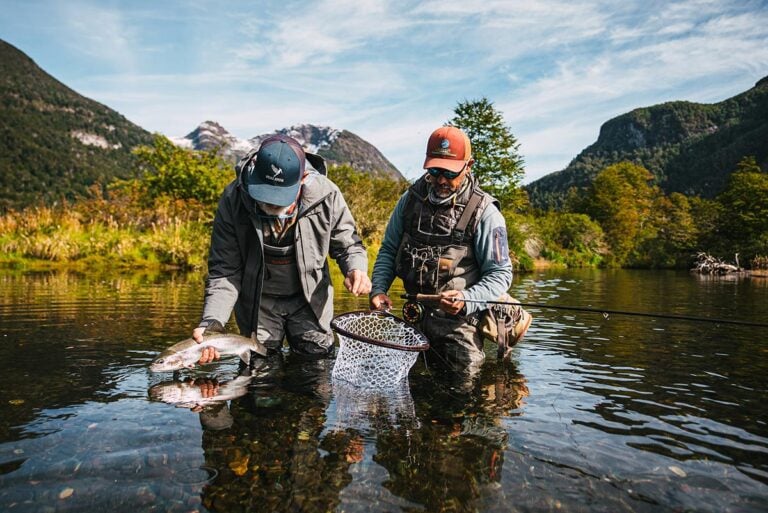
All fishing at Shackletons is boat-based, with a fleet of six two-seater boats and two larger transfer boats for bigger groups or families with younger children. Each boat carries a local guide — seven in total — all from surrounding villages and raised on this stretch of river, with some specializing in fly fishing. Guides tailor each day to the chosen methods, with fly specialists deployed when required.
Daily Fishing Rhythm at Shackletons
The day starts early, with a light breakfast in the central area being served at 6am, and the first boats ready to leave by 6.30am. Earlier departures are not permitted due to hippo activity in the channels.
The morning fishing session runs through to around 11:30, when everyone heads back to camp for brunch and a few hours to relax. Time-off can be spent by the pool, in the central area, or back at the chalet, before the afternoon fishing session.
The second session runs from 2pm until around 6pm, after which it’s snacks and drinks and dinner being served at 7.30pm. By this point the hippos, bush babies and elephants that move along the riverbanks after dark are usually starting to make themselves heard. Scheduling is flexible throughout: a full day on the water, a later start, or an earlier finish are all easily arranged.
Nembwe, Sharptooth Catfish and Bream of the Zambezi
Tigerfish are the headline here, but there are two other heavyweights. Nembwe are large, robust predatory cichlids that ambush prey from sunken timber and current confluences. One of the toughest members of the Zambezi cichlid group, they can exceed 6 kg / 13 lb and are strikingly colorful — light green to blue-green along the body, with a golden-yellow belly and yellow-margined fins. Once hooked, they fight with real determination, diving hard for the bottom and using powerful head shakes in an attempt to dislodge the hook.
Sharptooth catfish are a reliable secondary target, hard fighters that can weigh over 40 lb and give a strong account of themselves on the right tackle. Vundu catfish — one of the largest freshwater fish in Africa, capable of growing beyond 100 lb — are present in the system and occasionally landed, though encounters are rare enough to count as a genuine bonus rather than an expectation.
The upper Zambezi also holds good populations of bream, including three-spot, pink happy and thinface largemouth, all of which take lures and flies readily on lighter tackle.
Conservation on the Upper Zambezi
Shackletons operates strictly catch-and-release, with guides trained in proper fish handling to ensure all fish are returned in strong condition. No fish is retained for taxidermy, regardless of size, although there is always time for a quick measurement and photograph.
The lodge also supports local conservation efforts, working with a nearby NGO on netting and river stewardship, as well as with the local primary school on litter and recycling initiatives. One indicator of a healthy ecosystem is the presence of Cape clawless otters, which are regularly seen along the lodge’s stretch of riverbank.
This is a fishery that has remained consistently productive over time, in a remote stretch of Zambia reached by a long road transfer, or a scenic run by boat through the Simalaha Conservancy.
What makes Shackletons distinctive is how much the river itself shapes the tigerfishing. The variety of fishing techniques available is part of the appeal. Whatever the season, the tigerfish are there, and the challenge is matching the method to the river.
To learn more about the fishing and express an interest, message Shackletons.