Discover the best chum (keta) salmon fishing destinations, guided trips, and lodge-based experiences worldwide. Explore remote waters and world-class angling with expert local hosts.
Bristol Bay, Alaska
Arctic Char, Chinook (King) Salmon, Chum (Keta) Salmon
Bristol Bay, Alaska
Arctic Char, Chinook (King) Salmon, Chum (Keta) Salmon
Bristol Bay, Alaska
Chum (Keta) Salmon, Coho (Silver) Salmon, Dolly Varden
Bristol Bay, Alaska
Arctic Char, Chinook (King) Salmon, Chum (Keta) Salmon
Bristol Bay, Alaska
Arctic Char, Chinook (King) Salmon, Chum (Keta) Salmon
Alaska, United States
Chinook (King) Salmon, Chum (Keta) Salmon, Coho (Silver) Salmon
No results available
Chum salmon are aggressive, hard-fighting fish that bring serious action to rivers and estuaries across the North Pacific. Known for their stamina, vivid spawning colors, and explosive strikes on the fly, they are one of the most underrated Pacific salmon for sport anglers.
Often overshadowed by kings or coho, chum salmon fishing delivers when it comes to sheer energy. Second only to Chinook in size among Pacific salmon, they average 8 to 15 lbs with fish to 30 lbs not uncommon. They return in large numbers and hit flies, spinners, and jigs with force — especially in tidal reaches and estuary mouths where fish are chrome-bright and full of aggression.
For fly anglers, chums — also known as dog or keta salmon — are best targeted with bright streamers and swung patterns in lower river pools or estuary mouths. Their willingness to chase and their size and tenacity demand proper gear and smart handling.
Chums are widespread in Alaska with the broadest range of any Pacific salmon. Bristol Bay, the Kenai, and coastal rainforest systems see large runs from late summer through fall, often mixed with coho or pinks. The Alagnak River is among the best-known chum fisheries, with tidewater access to fresh, aggressive fish.
BC rivers including the Fraser and Skeena host major chum runs from September through November, with fly fishing and conventional techniques both effective in estuaries and holding pools. Fall chum on the Skeena system can run to impressive size.
Rivers on the Olympic Peninsula, Puget Sound, and Columbia Basin offer reliable fall fishing for fresh-run chums in tidewater zones and lowland streams.
Kamchatka hosts large, lightly pressured chum runs in wilderness river systems from June through September, often alongside pink and coho salmon.
These countries see some of the largest chum migrations globally, but sport fishing is often limited due to commercial focus and restricted access.
Chum combine aggressive strikes with the kind of sustained power that tests light to medium tackle thoroughly. Fresh-run fish in tidal water — often called “chrome chum” — are particularly ferocious, chasing swung flies and bright lures with force before the spawning instinct takes over. Their “tiger stripe” spawning colors and canine-like teeth add visual drama later in the season. As one of the most abundant Pacific salmon, they offer high-volume action on systems where other species may be under more pressure.
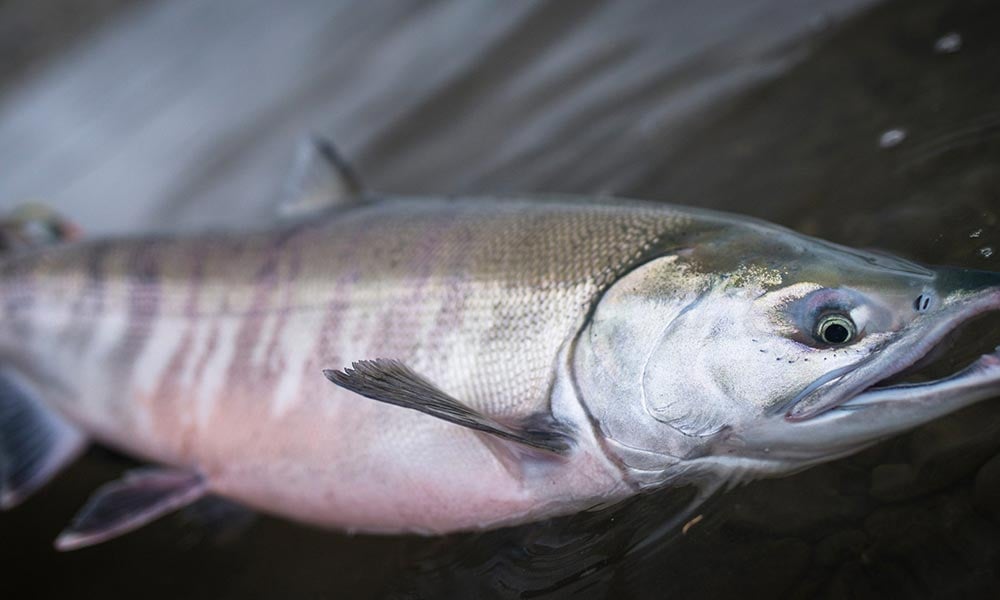
In the ocean, chum are metallic bluish-green along the back with tiny speckles — importantly, no spots on the back or tail, which distinguishes them from Chinook, coho, and pink salmon. The tail has distinctive silver streaks along the fin rays. As they enter freshwater, both sexes undergo a dramatic transformation: bold red, green, and purple calico bands develop along the flanks — the “tiger stripe” pattern. Males develop enormous canine-like teeth and a pronounced hooked jaw; females transform less dramatically, developing a dark horizontal bar along the lateral line.
Timing matters considerably — chum fishing is at its best on fresh-run fish near tidewater. Fish that have been in freshwater longer deteriorate quickly and fight less hard.
FishingExplora lists chum salmon lodges across Alaska. Each listing covers program structure, run timing, access, and direct contact with the lodge.
FishingExplora’s editorial content draws on lodge input, guide experience, published field reports, and independent research to help anglers make informed decisions about premium fishing destinations.
Yes — chum are among the more willing Pacific salmon on the fly, particularly when fresh from the ocean. They hit swung streamers, bright leeches, and egg patterns aggressively in lower river and estuary zones. The takes are often visual and forceful. Fish closest to tidewater are consistently the most aggressive, making tidal reaches the priority water for fly anglers.
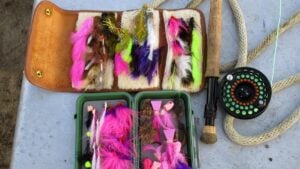
Bright, heavily dressed patterns in pink, chartreuse, and purple are the standard. Egg Sucking Leeches, Starlight Leeches, and Bunny Leeches tied on strong hooks are consistently productive. Chum respond well to flies with movement and flash — marabou and rabbit strips work well. Pattern size matters less than color and action; tie or buy on stout hooks as chum are hard on flies.
It depends on the system. Late-season timing on rivers receiving fresh tidal pushes can still deliver aggressive, chrome fish that fight hard and take flies readily. On rivers where fish have been in freshwater for weeks, condition deteriorates quickly and the fishing is less rewarding. The key is targeting fresh arrivals — sea lice on fish is the clearest sign you have the right fish.
Chum are powerful and dogged — they run deep and shake hard rather than jumping like coho. Fresh-run fish near tidewater can be genuinely difficult to stop on 8 or 9-weight gear. They are smaller than kings on average but fight hard for their size. Their reputation as a lesser sport fish is largely based on targeting deteriorated fish rather than fresh-run chrome fish.
Yes — chum handle catch and release well when targeted fresh from tidewater, as condition is still good and recovery rates are high. Use barbless hooks, keep fish in the water during unhooking, and use tackle heavy enough to land fish quickly. Fish that have been in freshwater for extended periods and are beginning to color up should be released with minimal handling to minimize stress.
We use cookies to improve your experience and enable key features on the platform. You can choose which cookies to allow. Some features may not work fully without consent.