The Appeal of Saltwater Fly Fishing
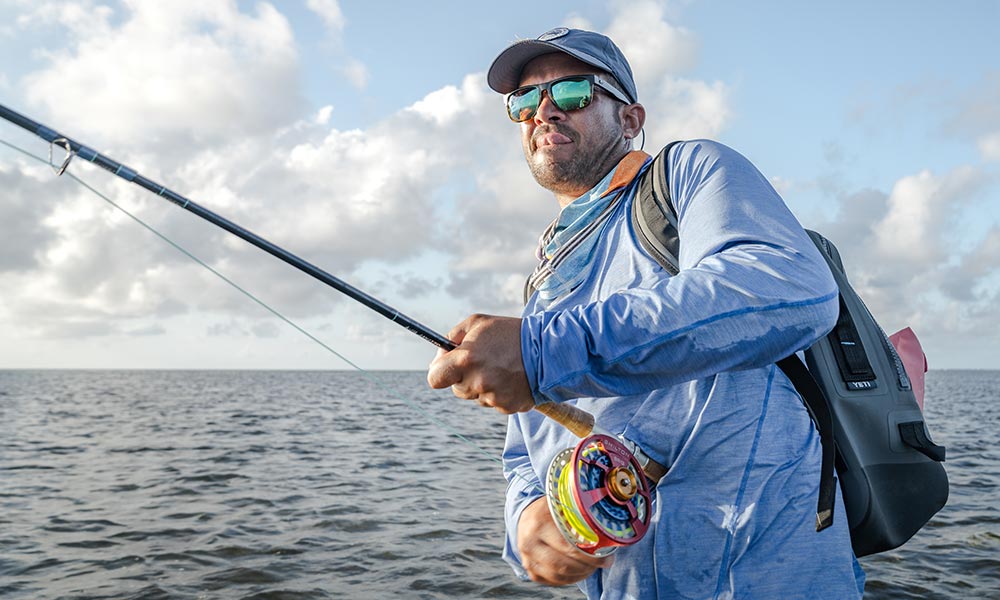
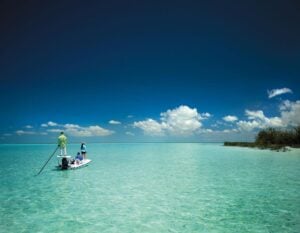
Saltwater fly fishing is all about precision, power, and visual connection—whether you’re stalking bonefish across sunlit flats, casting to cruising permit, or battling a GT in a surge channel. It takes you to remote tropical atolls, coral shorelines, and turquoise bays where timing, technique, and accuracy make all the difference.
Saltwater fly fishing pushes gear and anglers to their limits. It’s about spotting fish, reading current and tide, and making quick, accurate presentations in often challenging conditions. Wind, glare, and speed add pressure—but that’s part of the reward. Unlike freshwater fishing, saltwater trips often focus on a few high-stakes shots per day, making every cast count.
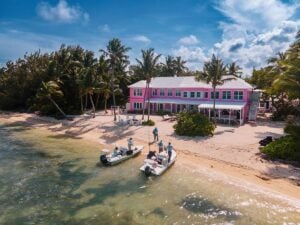
The best saltwater fly destinations are remote and lightly pressured. Lodges typically offer skiff access, experienced guides, and shallow systems ideal for sight fishing. Whether you’re chasing a grand slam in the tropics or hunting sea trout along cold, tidal estuaries, saltwater fly is a test of skill and focus.
Top Saltwater Fly Fishing Species
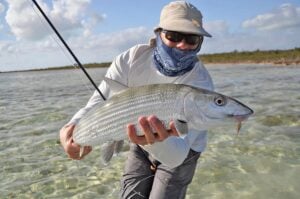
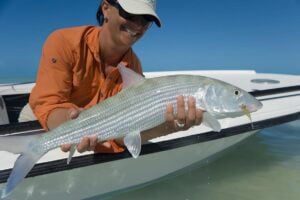
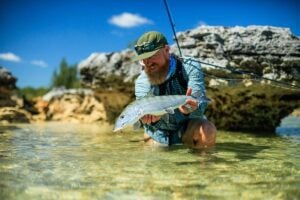
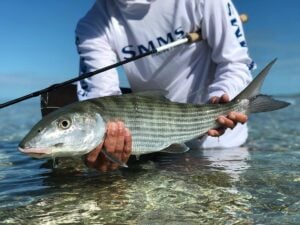
Bonefish – Fast, shallow-water ghosts
Speedy and elusive, bonefish are the perfect flats species—requiring delicate presentations and long, accurate casts.
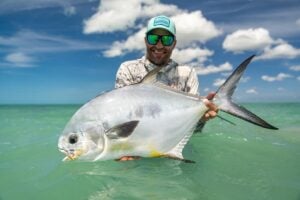
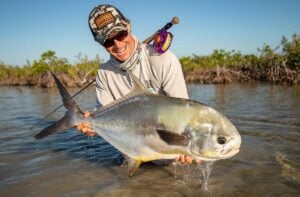
Permit – The most demanding flats target
Found across the Caribbean and Indo-Pacific, permit are highly wary and require stealth, precision, and nerves of steel.
Tarpon – Explosive acrobatics and long runs
The “silver king” offers unmatched power on the fly. Most often targeted in backwaters, estuaries, and flats systems.
Snook – Ambush feeders in mangroves and estuaries
Often found tight to cover or structure, snook respond well to accurate casts and baitfish patterns.
Triggerfish – Reef dwellers with surprising power
Targeted on Indo-Pacific flats and coral drop-offs. Known for tough fights and razor-sharp precision.
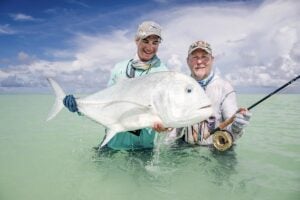
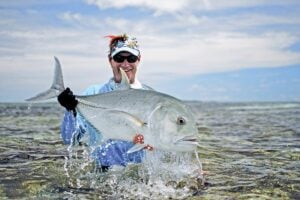
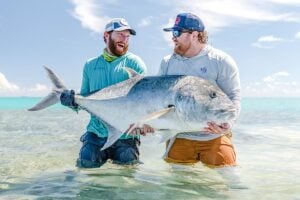
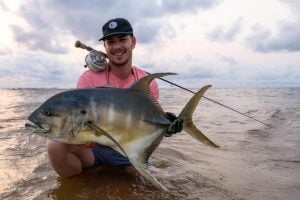
Giant Trevally – Savage, powerful reef predators
Aggressive and fearless, GTs hit streamers with brutal force and fight dirty in shallow coral terrain.
Often seen tailing on Indo-Pacific flats. Requires stealthy approaches and durable crab patterns.
Milkfish – Algae grazers with unstoppable runs
Hooking one is rare; landing one is harder. Milkfish take tiny flies and explode in open water.
Sea Trout – Estuary and shoreline specialists
Caught along tidal coastlines and river mouths. Often targeted during low light or when fish are staging near current.
Where and When to Plan a Saltwater Fly Fishing Trip
Bahamas – Vast flats and classic bonefishing
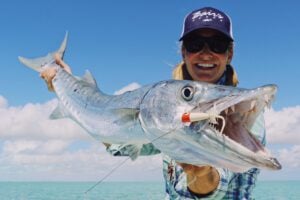
Best from October through June. Ideal for bonefish, permit, and barracuda in shallow water with great visibility.
March to September. Flats around Ascension Bay and Campeche offer permit, tarpon, and snook in close proximity.
October to May. Target giant trevally, triggerfish, bumphead parrotfish, and milkfish in remote flats systems.
Techniques Used in Saltwater Fly Fishing
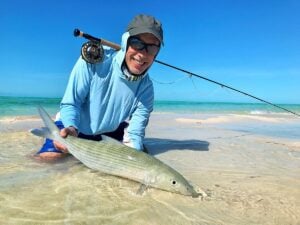
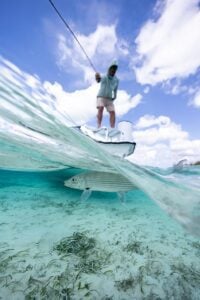
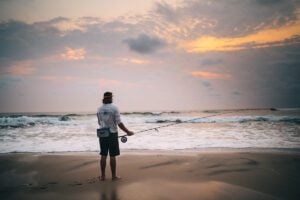
- Flats sight fishing – Visual stalking in shallow water for species like bonefish and permit. Demands accurate casts and stealthy wading.
- Crab and shrimp pattern presentations – Critical for permit and triggerfish. Flies must sink quickly and land quietly near feeding fish.
- Streamer stripping – Fast, aggressive retrieves used for tarpon, snook, and trevally. Often with intermediate or sinking lines.
- Popper fishing – Surface strikes from GTs, snook, and barracuda. Requires heavy leaders and strong hooks.
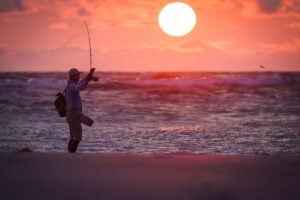
- Wading vs. skiff fishing – Depending on the fishery, anglers may stalk from boats or on foot—each demanding different gear and tactics.
- Wind casting – Essential skill in open saltwater. Double hauls and tight loops are critical in crosswinds or for long shots at moving fish.
- Rod and reel selection – Saltwater fly gear typically ranges from 8–12 weight rods. Strong reels with sealed drags are a must.
Saltwater Fly Fishing Lodges & Guided Trips
FishingExplora connects you with expert-run lodges that specialize in high-end saltwater fly fishing. From coral atolls in the Seychelles to the flats of the Yucatán or Bahamas, these trips are about quality, access, and time on the water with seasoned local guides.
Frequently Asked Questions
What’s the ideal rod weight for saltwater fly fishing?
Most flats fishing is done with 8–10 weight rods. An 8wt is standard for bonefish, while permit often require a 9 or 10. GTs and tarpon demand 11–12 weights with powerful but accurate casting.
How do I deal with wind when casting on the flats?
Use a tight loop, low trajectory, and double haul to punch through wind. Practice casting both forehand and backhand, and always adjust your stance based on the wind direction and fish movement.
What footwear works best for saltwater wading?
Use flats boots with reinforced soles to protect against coral, urchins, and sharp rock. Avoid open sandals. Neoprene socks help prevent sand abrasion and blisters on long walks.
Do I need wire leaders for saltwater fly fishing?
Only for toothy species like barracuda or bluefin trevally. For bonefish, permit, and tarpon, fluorocarbon leaders in 16–20 lb are common. Heavier butt sections help turn over wind-resistant flies.
What fly patterns should I bring for a saltwater trip?
Bring a mix of shrimp, crab, and baitfish patterns in various sizes and weights. Gotchas and mantis shrimp for bonefish, Flexo crabs for permit, and EP baitfish or black/purple tarpon streamers for bigger species.
What’s the difference between a saltwater and freshwater fly reel?
Saltwater fly reels are built with corrosion-resistant materials, sealed drag systems, and higher backing capacity to handle strong, fast-running fish. Freshwater reels typically have simpler construction, lighter drags, and aren’t made to withstand salt exposure. Always rinse saltwater reels after use to extend lifespan.