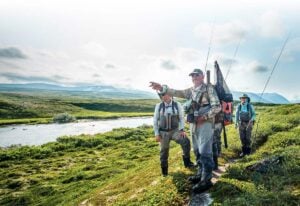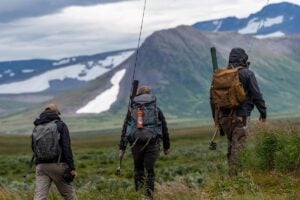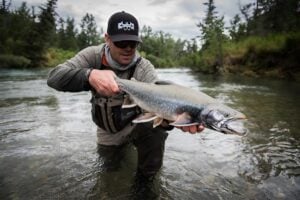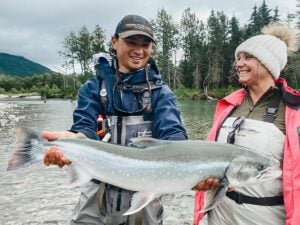
Explore fishing trips in Bristol Bay, staying at carefully selected lodges that combine expert guiding, remote wilderness settings, and exceptional angling.

No results available
Bristol Bay draws more lodge-based anglers than any other region in Alaska. The watershed — roughly 40,000 square miles of tundra, braided rivers, and interconnected lake systems — supports the largest wild sockeye salmon run on earth and some of the most productive trophy rainbow trout fishing found anywhere. Most lodges here are accessible only by floatplane — and even those with road-accessible bases on the lower Naknek River run daily fly-outs to reach productive water. That inaccessibility is the point.
The Bristol Bay watershed in southwestern Alaska supports all five Pacific salmon species across nine major river systems, all of them entirely wild — no hatchery fish are raised or released anywhere in the drainage. Annual sockeye returns to the bay have averaged over 30 million fish since 2001, with the Kvichak and Nushagak drainages accounting for roughly half the total watershed area and some of the most consistent sport fishing in the region.
For visiting anglers, Bristol Bay is defined by two things above all: the salmon runs and the rainbow trout. The Naknek, Kvichak, and Alagnak rivers carry king salmon from mid-June through July, with sockeye following in vast numbers through early July and coho arriving from August into September.
The resident rainbow trout — sustained by years of salmon-egg feeding and protected under ADF&G’s designated Trophy Rainbow Trout area designations on systems like the Kvichak and Lake Iliamna — are among the largest wild rainbows in Alaska, with fish regularly exceeding 30 inches on the bigger lake-headed rivers.
Lodge programs here are built around floatplane mobility. A single lodge typically has access to dozens of rivers, creeks, and lakes within range, which allows guides to pivot daily based on run timing, water conditions, and fishing pressure. The best Bristol Bay weeks are shaped by weather windows and fish counts as much as by itineraries — flexibility is not a selling point, it is a structural requirement of fishing this region well.
For those comparing different lodge formats across the Bristol Bay watershed — fly-out programs, saltwater operations, and river-based lodges — see our Editorial Guide to Alaska Fishing Lodge Programs, which explains how these programs differ and how to choose the right fit.
The Naknek River flows from Naknek Lake — which drains Katmai National Park — westward to Bristol Bay near King Salmon, one of the region’s main hub airports. The river carries all five Pacific salmon species and is designated by ADF&G as one of Alaska’s premier trophy rainbow trout fisheries. King salmon enter the system from mid-June, with sockeye, chum, and pink following through July and coho arriving in August.
The Naknek’s proximity to King Salmon and its home-water fishing make it a practical and productive base for fly-out programs that reach deeper into the Katmai and Bristol Bay drainages.
The Kvichak River drains Lake Iliamna — one of the largest lakes in Alaska at roughly 77 miles long — into Bristol Bay and carries the world’s largest single-river sockeye salmon run. The Kvichak and its tributary systems, including the Copper River, hold an ADF&G-designated Trophy Rainbow Trout fishery, with large adfluvial rainbows migrating between the lake and river systems seasonally.
Fish regularly exceed 30 inches on the bigger water, sustained by abundant salmon runs throughout the drainage. The Kvichak and Naknek are both subject to spring closures to protect spawning rainbows, typically reopening in early June. Verify exact dates against the current ADF&G Bristol Bay sport fishing regulation booklet before planning — they can change year to year.
Katmai National Park and Preserve covers 4.2 million acres of wilderness immediately adjacent to the Bristol Bay watershed. The park’s rivers — among them the Brooks, Moraine, Battle, Funnel, Kulik, American, Big Ku, and Little Ku — are among the most celebrated trophy rainbow trout streams in Alaska, with clear water, manageable wading, and fish populations sustained by heavy sockeye-egg feeding.
The Alagnak River, which drains the Nonvianuk and Kukaklek lake systems through Katmai, carries all five salmon species and provides some of the most diverse multi-species fishing in the region. Lodges positioned within or adjacent to Katmai benefit from short flight times to multiple world-class rivers.
The Nushagak carries the largest king salmon run in the Bristol Bay watershed, with Chinook running from mid-June through early July across a broad, powerful river system suited to swung flies and heavy presentations. Wood-Tikchik State Park — at 1.6 million acres, the largest state park in the United States — sits north of Dillingham and encompasses two interconnected systems of deep glacial lakes draining into the Nushagak via the Wood River.
The Agulowak and Agulukpak rivers, which connect the Wood River lake chain, are among the most productive sport fisheries in the park, holding rainbow trout, arctic char, grayling, and all five salmon species. Lodges based on the Wood River lake system offer some of Bristol Bay’s most diverse and least-pressured water.
The rivers of western Bristol Bay — the Kanektok, Goodnews, and Togiak — drain the Ahklun and Wood River mountains through the Togiak National Wildlife Refuge to Kuskokwim Bay. The Kanektok, known locally as the “Chosen River,” carries all five Pacific salmon species alongside trophy leopard rainbow trout, Dolly Varden, arctic grayling, and northern pike.
King salmon run from mid-June into July; coho arrive from late July through September. These western rivers see considerably less angling pressure than the Naknek and Kvichak systems, and camp-based programs on the Kanektok and Goodnews consistently deliver some of the most diverse multi-species fishing available anywhere in Alaska.
Bristol Bay lodges typically operate from early June through late September, with the best timing determined by which species you are prioritizing. For a full month-by-month breakdown of how each salmon species runs across Alaska’s regions, see our guide to the best months for salmon fishing in Alaska.
FishingExplora connects anglers with carefully selected lodge operators across Bristol Bay — from fly-out programs with access to multiple Katmai and Kvichak drainages to camp-based operations on western rivers like the Kanektok and Goodnews. You can contact hosts directly and plan your program from here.
For more lodge-based options across Alaska’s regions, see our Alaska fishing lodges page.
FishingExplora’s editorial content draws on lodge input, guide experience, published field reports, and independent research to help anglers make informed decisions about premium fishing destinations.
Scale and remoteness. The watershed covers roughly 40,000 square miles. Road access reaches only the regional hubs — King Salmon and Dillingham — and the fishing water itself is almost entirely aircraft-dependent, which keeps pressure low across the best rivers. The combination of the world’s largest wild sockeye run, ADF&G-designated trophy rainbow trout fisheries on systems like the Kvichak and Lake Iliamna, and the ability to fly to a different drainage each day gives Bristol Bay a diversity and quality that road-accessible regions cannot match.
For wild, river-resident rainbows it is hard to argue against it. ADF&G has designated the Kvichak and Lake Iliamna systems as Trophy Rainbow Trout areas — a formal recognition of their exceptional fish quality. The Naknek and Katmai rivers hold some of the largest leopard-spotted rainbows in the state, sustained by heavy salmon runs that fuel year-round feeding. Fish exceeding 30 inches are caught regularly on the bigger lake-headed systems through summer and into fall.
July is the peak month for sockeye salmon and offers strong king action through mid-month on most systems. June suits anglers targeting early kings and active rainbow trout as the season opens. August and September are the best months for coho salmon and trophy rainbows — September in particular produces the largest trout of the season on the Naknek and Kvichak as fish concentrate below spawning salmon.
All Bristol Bay lodges are reached by air. Most guests fly commercially to Anchorage, then connect to a regional hub — typically King Salmon, Dillingham, or Bethel depending on the lodge — before a final floatplane or charter transfer. Most lodge programs coordinate the in-region flights as part of arrival logistics. The full journey from Anchorage typically takes half a day.
A 7- or 8-weight covers most trout, grayling, and sockeye fishing. An 8- or 9-weight handles coho salmon and works well for swinging flies on larger rivers. King salmon on big water like the Nushagak calls for a 9- or 10-weight single-hand rod or a mid-to-heavy spey outfit. Most lodges carry backup gear, but bringing your own matched to your target species is advisable.
Yes, though the environment is genuinely remote and weather-dependent. Most lodge programs include full guiding, on-water instruction, and gear support. The salmon fishing in particular is accessible to anglers of all skill levels — the fish are numerous and aggressive. The trophy rainbow trout fishery on rivers like the Naknek and the Katmai streams is more technical and better suited to anglers with some fly fishing background.
Some lodges — primarily those based on the Naknek River near King Salmon — offer fly-out halibut days to Alaska Peninsula coastal waters as an add-on to the standard freshwater program. It is not a core feature of Bristol Bay fishing in the way it is in Southeast Alaska or Kodiak, but worth asking about at the lodge level when booking.
We use cookies to improve your experience and enable key features on the platform. You can choose which cookies to allow. Some features may not work fully without consent.