Why Anglers Travel to Fish For Trout
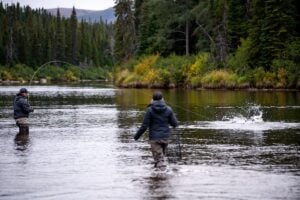
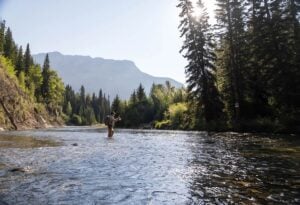
Trout fishing challenges anglers to adapt to changing conditions, read water effectively, and make precise presentations. Whether you’re working spring creeks in Patagonia or casting on glacier-fed rivers in Mongolia, these fisheries demand skill, patience, and a sharp eye for detail.
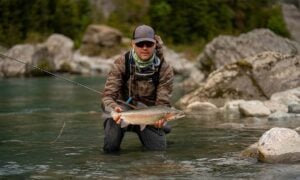
Trout draw anglers to some of the most scenic and technically demanding waters on Earth. From freestone rivers and spring creeks to remote lakes and tidal estuaries, each fishery offers its own challenges. What unites them is the need for skill—reading water, timing hatches, and adapting tactics. Whether targeting browns in Patagonia or steelhead in British Columbia, anglers travel for the variety, complexity, and pursuit of truly wild fish.
Types of Trout You Can Target
Brown Trout – Technical and widespread
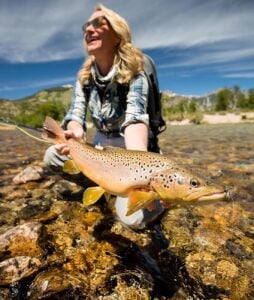
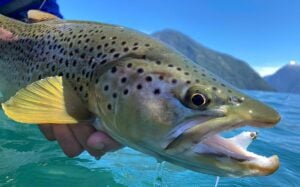
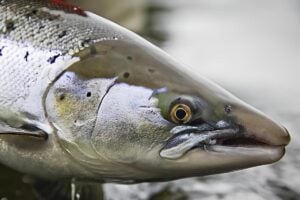
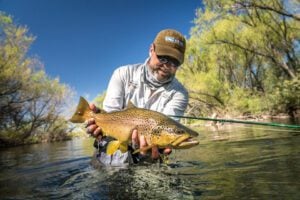
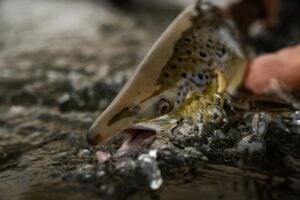
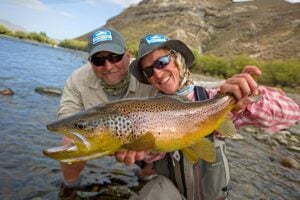
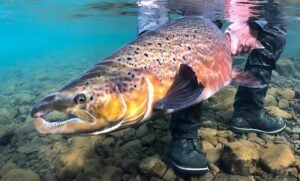
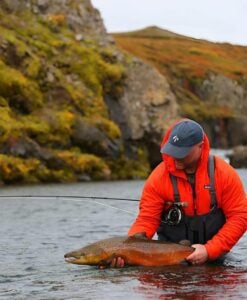
Brown trout (Salmo trutta) are among the most respected targets in fly fishing. Found in rivers and lakes across Europe, Patagonia, and New Zealand, they demand stealth and precise presentation—especially in clear, slow water.
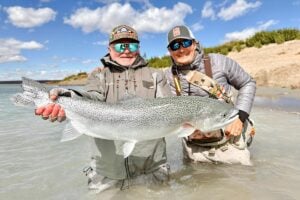
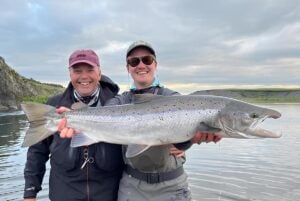
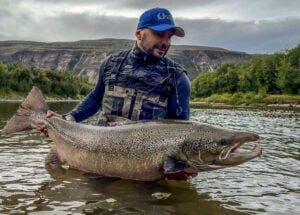
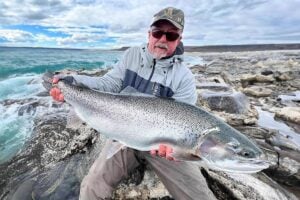
These saltwater-feeding brown trout return to rivers to spawn. From the UK and Scandinavia to Tierra del Fuego, they offer aggressive takes in estuaries and lower river reaches. Timing and tide play a key role in success.
Rainbow Trout – Versatile and responsive
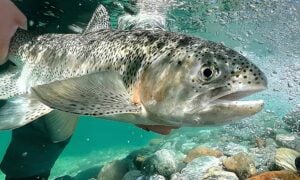
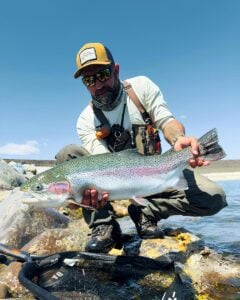
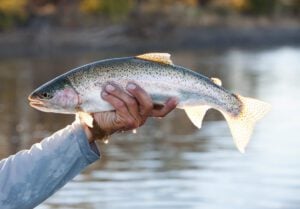
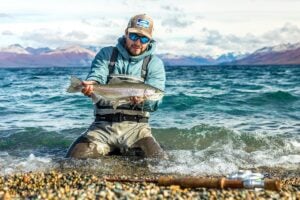
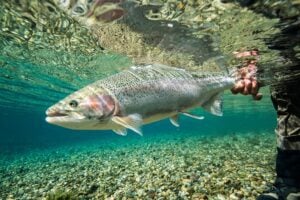
Rainbow trout (Oncorhynchus mykiss) are found worldwide. Their willingness to take dry flies, acrobatic fights, and adaptability to rivers and lakes make them a favorite from the Rockies to the Andes.
Steelhead – Ocean-run challenge
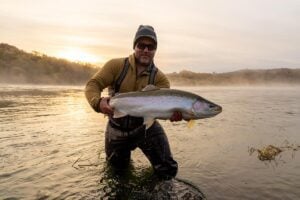
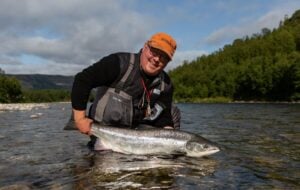
The anadromous form of rainbow trout, steelhead migrate from saltwater to spawn in freshwater. Known for powerful runs and difficult timing, they’re the ultimate swing-target in British Columbia, Alaska, and the Pacific Northwest.
Brook Trout – Small stream specialist
Brook trout (Salvelinus fontinalis), a type of char, are beloved for their colors and eagerness to rise. Found in cool creeks, mountain lakes, and spring-fed rivers, they thrive in North America and parts of Europe.
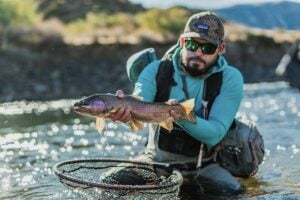
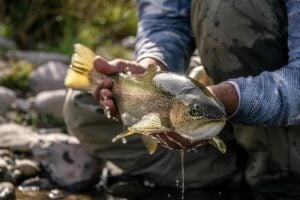
Native to the western U.S. and Canada, cutthroat trout (Oncorhynchus clarkii) inhabit everything from alpine lakes to desert creeks. They often rise readily to dry flies, especially terrestrials.
Other Trout & Char You Can Target
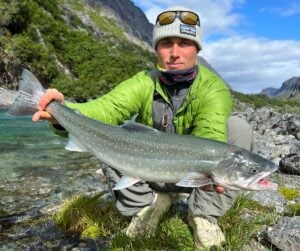
- Arctic Char – Found in Greenland, Iceland, Nunavut, and Alaska’s Arctic rivers. Vivid colors and aggressive strikes during spawning season.
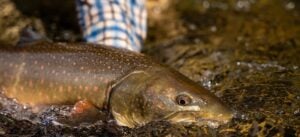
- Bull Trout – Apex predator in cold western rivers. Strikes big streamers in deep pools and undercut banks.
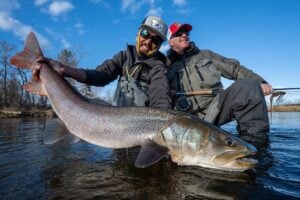
- Taimen – Mongolia’s topwater giant. Takes large flies in remote Siberian and Mongolian waters.
- Dolly Varden – Resident and sea-run forms in Alaska, BC, and Russia. Often confused with Arctic char.
- Lake Trout – Deep-dwelling predator of northern lakes. Targeted by jigging or trolling.
- Asian Trout / Lenok – Primitive trout from Siberia and Mongolia. Takes dries, nymphs, and streamers during wilderness float trips.
- Golden Trout – High-altitude specialist from California and the Rockies
- Tiger Trout – Sterile hybrid between brown and brook trout
- Marble Trout – Rare Adriatic native with distinctive patterning
- Blue Trout – Hatchery-derived rainbow variant stocked in select stillwaters
Top Fishing Destinations for Trout
- North America: Rainbows, char, and steelhead from the Rockies to remote Alaskan drainages.
- Argentina: Sea-run giants on the Río Grande and dry-fly browns in the spring creeks of Patagonia.
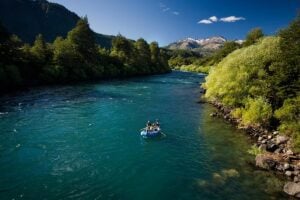
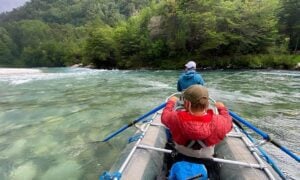
- Chile: Glacier-fed rivers, deep lakes, and backcountry float trips for wild browns and rainbows.
- New Zealand: South Island’s sight-fishing rivers for double-digit brown trout.
- Europe: Chalk streams in England, sea-run browns in Scandinavia, loch browns in Scotland & Ireland.
- Tasmania: Backcountry lakes and tailwaters with technical dry-fly opportunities for brown trout.
Trout Fishing Techniques
- Dry-Fly & Emerger Work: Critical in hatch-driven fisheries for browns, rainbows, and cutthroat.
- Nymphing (Euro & Indicator): Productive year-round in rivers and tailwaters.
- Streamer & Mouse Patterns: Effective for large browns, bull trout, and taimen.
- Light-Tackle Spinning: Good for small lakes, fast water, and high wind conditions.
- Trolling & Downrigging: Common for lake trout and deepwater browns during summer.
- Ice Fishing: Used for lake-dwelling species and char in frozen northern waters.
Best Time to Fish For Trout
- Spring & Fall (Northern Hemisphere): Peak for most river trout and pre-spawn activity.
- November–April (Southern Hemisphere): Prime in New Zealand and Patagonia during summer months.
- High Arctic & Taimen Fisheries: Best from June to August when rivers are clear and active.
- Steelhead: Seasonal runs vary—winter fish in BC and the PNW, fall fish in Alaska and Kamchatka.
Trout Fishing Trips & Guides
FishingExplora connects anglers with trusted trout fishing trips, guides, and lodges worldwide. From the spring creeks of Patagonia to remote Arctic char waters, you’ll find expert-led experiences, well-managed fisheries, and access to top trout lodges in truly wild settings.
Frequently Asked Questions
Which trout species are best for dry fly fishing?
Brown, rainbow, and brook trout are especially responsive to surface presentations. In clear water or during seasonal hatches, dry-fly fishing can be the most effective and visually rewarding method—particularly in regions like New Zealand, Patagonia, and the Rockies.
What’s the most remote trout destination on FishingExplora?
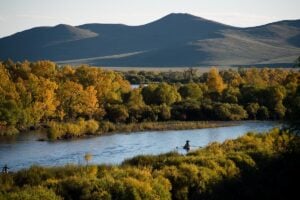
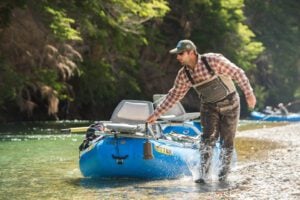
Mongolia and Greenland are among the most remote trout destinations listed. Mongolia offers float-trip access to taimen and lenok; Greenland’s fjord systems host migratory Arctic char far from roads or infrastructure, requiring charter flights or boat access.
Are char species like brook trout and Arctic char really trout?
Technically no—they belong to the Salvelinus genus (char). But because they share cold-water habitats and similar fly fishing tactics, they’re often grouped with trout in angling circles and on FishingExplora.
When is the best time to plan a steelhead trip?
Steelhead timing varies by region. In Alaska and Kamchatka, September is prime. On the Pacific Coast of North America, winter runs peak from November to February, while summer runs enter rivers from July onward in British Columbia and the PNW.
Do trout fishing tactics vary by hemisphere?
Yes. In the Northern Hemisphere, spring and fall are prime. In the Southern Hemisphere, summer months (Nov–Apr) dominate. Fly hatches, river flow, and angler pressure all influence tactics, from dry-fly work to heavy streamers or technical nymphing.
What is Euro nymphing, and why do anglers use it for trout?
Euro nymphing is a tight-line, contact nymphing method developed in Europe for catching trout in fast, clear rivers. It eliminates traditional fly lines and indicators, using long leaders and weighted flies to maintain direct control. Anglers use it to detect subtle takes and cover depth efficiently, especially when trout aren’t rising.